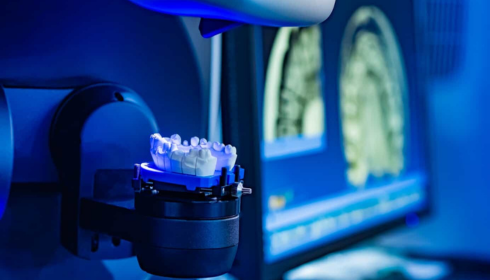
In the modern era of dentistry, the fusion of technology and patient care has never been more pronounced. As dental practices aim to provide faster, more accurate, and higher quality services, the integration of advanced digital equipment becomes imperative. When designing a dental office with a substantial budget, it is crucial to consider the inclusion of state-of-the-art milling solutions that can significantly enhance the workflow and patient experience. Alternatively, if budget constraints are a factor, outsourcing specific tasks to specialized dental labs can be a strategic alternative.
The Essential Six: Key Digital Equipment for Modern Dental Offices
l Intraoral Scanner
Purpose: This device replaces traditional impressions by capturing high-resolution 3D images of a patient’s oral cavity. It provides precise data for designing restorations, orthodontic appliances, and surgical guides.
l Advanced Milling Solution (Combining Dry Milling and Five-Axis CNC Capabilities)
Purpose: This versatile machine combines the functions of a dry milling machine and a five-axis CNC milling machine. It is capable of milling a wide range of materials, including pre-sintered zirconia, resin, and metals, with exceptional precision and detail. This single investment streamlines the fabrication process of crowns, bridges, and other complex restorations.
l Zirconia sintering Dental Furnace
Purpose: Essential for the sintering process of zirconia restorations, this zirconia dental furnace ensures that the materials achieve optimal strength and aesthetic properties before being placed in the patient’s mouth.
l CAD/CAM Design Software
Purpose: This software allows dentists to design custom restorations digitally, integrating seamlessly with intraoral scanners and the advanced milling solution to create precise, patient-specific solutions.
l Dental 3D Printer
Purpose: Used for printing surgical guides, temporary restorations, and models, this technology offers flexibility and accuracy, enhancing the precision of procedures like implant placements and orthodontic treatments.
l Cone Beam Computed Tomography (CBCT)
Purpose: Providing high-resolution 3D images of the jaw, teeth, and surrounding structures, CBCT is invaluable for detailed diagnostics and treatment planning, especially for complex cases involving implants, extractions, and endodontics.
Equipment Integration and Workflow Optimization
Integrating these six pieces of equipment into a dental office design creates a cohesive and efficient workflow. Here’s a simplified table outlining the role of each piece of equipment in the clinical workflow:
Dental Office Equipment Workflow Table:
Equipment Name
Primary Function
Workflow Stage
Intraoral Scanner
Captures digital impressions
Data Acquisition
CAD/CAM Design Software
Designs custom restorations
Design and Planning
Advanced Milling Solution
Mills crowns, bridges, and complex restorations
Restoration Fabrication
Zirconia Dental Furnace
Sinters zirconia restorations
Restoration Finalization
Dental 3D Printer
Prints surgical guides and temporary restorations
Auxiliary Fabrication
Cone Beam CT (CBCT)
Provides 3D imaging for detailed diagnostics
Diagnostic Imaging
Outsourcing as a Strategic Option
For practices with budget constraints, outsourcing specific digital prosthetic tasks to specialized dental labs can be a strategic option. Labs equipped with advanced milling solutions can handle tasks such as zirconia sintering and complex CAD/CAM designs, allowing the dental office to maintain a high standard of care without the upfront cost of purchasing and maintaining expensive equipment.
Conclusion
Designing a dental office with a focus on integrating advanced milling solutions and other digital equipment can transform the practice, making it more efficient, accurate, and patient-friendly. Whether through direct investment in key technologies or strategic outsourcing, embracing digital dentistry is a forward-thinking approach that aligns with the evolving expectations of modern dental care. By carefully considering the equipment needed and how it fits into the overall workflow, dental practices can ensure they are well-equipped to meet the demands of today’s patients while setting a foundation for future success.