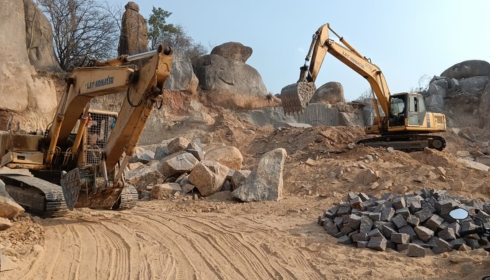
A commercial jobsite runs on choreography. Materials must hit the ground in the right volume, at the right hour, and land exactly where crews can use them. For project managers sourcing rock and dirt delivery, the difference between a smooth build and a stalled one often comes down to logistics more than materials.
Hauling Capacity That Matches Large Jobsite Demand
Commercial work moves in bulk. A provider must operate trucks and hauling systems built for volume, not residential loads. Projects involving building pads, parking bases, storm trenches, or mass grading often require hundreds of tons of gravel for sale, fills, or aggregate delivered in tight cycles. Without the equipment size and fleet scale to match, delays stack up fast.
Large builds don’t benefit from piecemeal loads that trickle in. They need a supplier capable of moving material at production pace, not retail pace. The right hauler aligns truck capacity with project scope, reducing round trips, trucking congestion, and wait time for crews standing by on pour or compaction windows.
Material Accuracy Across Soil, Aggregate and Fill Orders
Ordering by name is not the same as receiving the right material. Commercial sites rely on clear distinctions between screened soils, structural fills, road base, clean stone, and bedding aggregates. Getting a load that’s “close enough” can disrupt drainage, compaction, or structural performance.
Contract specifications often include precise sizing, grade, and composition. A supplier who understands the difference between fill dirt, topsoil, base rock, and drainage stone prevents expensive rework. Material accuracy also impacts inspection approvals, moisture behavior, and layer performance long after the trucks leave.
Delivery Timing Aligned to Active Build Phases
The schedule at a construction site has zero flexibility for late loads. Base rock for compacting must arrive before rollers show up. Fill must land before grade crews move into the next zone. Rocks for sale that arrive a day early or late can derail a sequence tied to subcontractors and equipment rentals.
What looks like a scheduling cushion on paper often settles into minutes on the ground. Effective delivery timing means dispatching around weather, machinery availability, crew shifts, and inspection windows. Providers who treat delivery as part of the construction phase—not a separate errand—fit naturally into active progress instead of slowing it down.
Dump Placement Control on Tight or Active Commercial Sites
Drop location is rarely wide-open. Active jobsites may involve footers, material stacks, heavy equipment travel lanes, power lines, fenced perimeters, temporary offices, or freshly poured zones that trucks must avoid. A provider who cannot place loads precisely creates downstream labor moving material twice.
Experienced drivers drop with intent—stockpiles that minimize machine travel, windrows that match grading direction, or segmented piles that feed crews sequentially. Placement discipline also protects site safety, prevents surface damage, and reduces machine idle time spent relocating materials after delivery.
Load Consistency Avoiding Mix Contamination Mid-project
Consistency matters more than most project plans account for. A single delivery that mixes debris, oversized stone, excess clay, or foreign material can change compaction rates, water behavior, and layer stability. Mixing loads mid-project can invalidate engineered expectations for density and load-bearing performance.
Visually similar material is not functionally equal. A supply chain that maintains separation between stockpiles, screening processes, and loading points keeps deposits uniform from first truck to last. Consistent loads reduce surprises during proof rolling or density tests, where mixed material often surfaces as a red flag.
Equipment Sizing Fit for Site Access Points and Clearance
Commercial access points aren’t standardized. Some sites have narrow entrances, steep approaches, weight restrictions, or overhead limits. A truck that cannot enter or dump safely becomes a logistical roadblock instead of a solution. Right-sizing equipment protects schedules and site surfaces.
Appropriate truck sizing also determines cycle efficiency. Oversized haul units blocked by clearance issues move slower than medium units that maintain constant flow. Providers who match vehicles to site conditions maintain production without sacrificing safety or damaging infrastructure during entry or exit.
Response Speed for Same-week or Staggered Volume Orders
Commercial schedules rarely unfold exactly as planned. Weather changes, inspection gaps, redesigns, and crew acceleration can create unexpected material demand spikes with very short notice. A supplier must handle both surge volume and phased orders without straining response times.
Fast response doesn’t mean rushed execution. It means readiness, coordinated dispatch, and inventory availability when a project shifts unexpectedly. Providers who support staggered volume orders ensure sites receive material in cadence rather than all at once, reducing congestion and double handling.
Order Transparency from Dispatch to Drop Confirmation
Visibility prevents confusion. Commercial teams track deliveries in real time, managing equipment, crews, and next-stage dependencies around load arrivals. Clear communication from dispatch through delivery allows project managers to coordinate compaction, grading, spreading, or trench progress without guessing timestamps.
Order transparency also protects accountability. Knowing when material left the yard, the route, estimated arrival, and confirmed drop reduces disputes and supports documentation for project logs, inspection backups, and scheduling notes. Reliable communication turns deliveries into predictable milestones.
Large commercial builds need suppliers who understand production tempo as well as material quality. Services that combine heavy hauling capacity, exact material sourcing, precise placement, and schedule coordination prevent lost days and rework. For commercial teams looking for dependable rock and dirt delivery near me—including fills, base materials, rocks for sale, and project-scale aggregate supply—North Alabama Rock and Dirt brings the capacity and responsiveness to keep jobsite schedules intact.